
When you think of military vehicles, one of the first that likely comes to mind is the Humvee—an iconic, all-terrain vehicle that has been integral to military operations worldwide. These vehicles are designed for flexibility, resilience, and off-road capability, making them suitable for various harsh conditions.
However, one of the most crucial components of the Humvee that plays a pivotal role in its performance is the tire. The weight of a Humvee tire is not only vital for the overall performance of the vehicle, but it also has a significant impact on factors like fuel efficiency, handling, and durability.
In this article, we will dive deep into the specifics of how much a Humvee tire weighs, how its weight affects the vehicle’s performance, and the factors that influence it. We will break down the differences between various types of Humvee tires, explore the components that contribute to their weight, and look into the cost and maintenance considerations. Whether you’re a military enthusiast, a civilian Humvee owner, or simply curious about these beastly tires, this guide is for you.
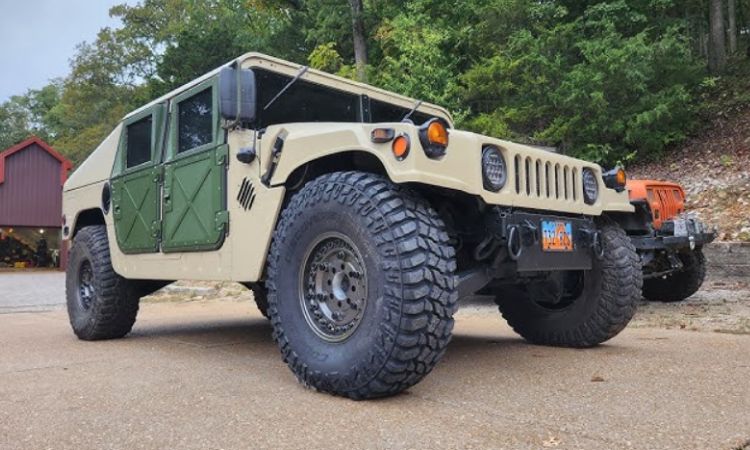
What Is a Humvee Tire?
A Humvee tire is a highly specialized, robust, and all-terrain tire designed specifically for military vehicles such as the High Mobility Multipurpose Wheeled Vehicle (HMMWV), commonly known as the Humvee. The primary purpose of these tires is to support the vehicle’s weight while providing stability and traction on difficult terrains such as sand, mud, snow, and rocky surfaces. Unlike standard tires found on civilian vehicles, Humvee tires are built for maximum durability, puncture resistance, and the ability to withstand extreme conditions that the vehicle might encounter in military operations.
Typically, Humvee tires have a substantial diameter of 37 inches (94 cm) and a width of 12.5 inches (31.75 cm). This gives them a larger footprint compared to civilian vehicle tires, which aids in distributing the vehicle’s weight more effectively across rough and uneven terrains. Additionally, the tires are mounted on 16.5-inch rims, which are specifically designed to accommodate the tire’s heavy-duty build.
Humvee tires are generally made from robust materials like reinforced rubber and steel belts. This construction makes them capable of handling extremely heavy loads, making them perfect for military missions that require both durability and reliability.
Types of Humvee Tires
Humvee tires are classified based on their construction, and there are two primary types that serve different purposes: Bias Ply Tires and Radial Ply Tires. Each type of tire is designed to meet specific performance needs, and they come with distinct advantages and disadvantages.
1. Bias Ply Tires
Construction: Bias ply tires are constructed by layering fabric plies (usually nylon, polyester, or steel) that crisscross at different angles. This structure forms a rigid and durable tire capable of handling heavy loads.
Weight: Bias ply tires are generally heavier than radial ply tires, with weights ranging between 100-120 lbs (45-54 kg) per tire. The multiple layers of rubber and steel belts contribute to the tire’s overall weight.
Benefits:
- Durability: Bias ply tires are known for their strength and ability to withstand harsh environments. They are less likely to suffer from punctures when compared to lighter tire options.
- Puncture Resistance: Due to their rigid construction, bias ply tires offer superior puncture resistance, which is crucial for military vehicles operating in rough terrains.
- Applications: These tires are commonly used in older Humvee models, such as the M998, and other military vehicles that require extra durability in extreme conditions.
Disadvantages:
- Fuel Efficiency: Heavier construction leads to higher rolling resistance, which can decrease fuel efficiency. This is an important consideration for military operations where fuel economy is a priority.
2. Radial Ply Tires
Construction: Radial ply tires are constructed with steel belts beneath the tread and plies running perpendicular to the direction of travel. This design allows for more flexibility in the tire’s sidewalls, resulting in smoother handling.
Weight: Radial ply tires are generally lighter than bias ply tires, with typical weights ranging from 90-100 lbs (40-45 kg) per tire. The lighter construction makes them more efficient for certain applications.
Benefits:
- Improved Fuel Efficiency: The flexible sidewalls of radial ply tires reduce rolling resistance, which improves fuel efficiency—a critical factor for military vehicles operating over long distances.
- Smoother Ride: Radial ply tires offer a more comfortable ride, especially in civilian models of the Humvee used for non-combat purposes.
- Applications: Radial ply tires are more commonly used in newer Humvee models, such as the M1114, which is heavily armored. The design allows for improved handling and traction while maintaining a higher fuel economy.
Disadvantages:
- Puncture Resistance: While radial ply tires offer a smooth ride, they are not as puncture-resistant as their bias ply counterparts, making them less suitable for extremely rugged terrains or military applications.
Run-Flat Inserts (Optional)
Some Humvee tires are equipped with run-flat inserts, which are designed to allow the vehicle to continue driving even after a tire is punctured. These inserts add weight to the tire—typically 10-15 lbs (4.5-6.8 kg) more—due to the reinforced structure needed to maintain mobility in the event of a puncture. These inserts are particularly valuable for military operations in hostile environments where immediate tire repair or replacement is not feasible.
How Much Does a Humvee Tire Weigh?
The weight of a standard Humvee tire varies depending on the construction type, size, and additional features like run-flat inserts. Generally, a Humvee tire weighs between 100 to 120 lbs (45 to 54 kg). The weight range is influenced by several factors:
- Tire Type: As previously discussed, bias ply tires tend to be heavier than radial ply tires due to the thicker construction.
- Model Year: Newer Humvee models tend to use lighter radial ply tires, which have been optimized for better performance and fuel efficiency, whereas older models often use heavier bias ply tires.
- Additional Features: Tires with added reinforcement or armor, particularly on heavily armored Humvee variants like the M1114, will weigh more due to the extra materials used.
For instance:
- M998 Humvee: Uses bias ply tires, typically weighing 110 lbs (50 kg) per tire.
- M1114 Humvee: This heavily armored version of the Humvee uses tires that can weigh up to 120 lbs (54 kg) each, especially when factoring in the added armor and run-flat inserts.
Comparison Table: Humvee Tire Weight and Specifications
| Tire Model | Weight (lbs) | Weight (kg) | Ply Rating | Max Load (lbs) | Max PSI | Price Range (USD) | Tread Depth (inches) | Tire Type |
|---|---|---|---|---|---|---|---|---|
| Goodyear Wrangler MT | 100 | 45.4 | D (8-ply) | 3,850 | 50 | $150 – $400 | 1.25 | Radial |
| BFGoodrich Baja T/A | 110 | 49.9 | E (10-ply) | 4,000 | 50 | $135 – $450 | 1.3 | Bias Ply |
| Michelin XZL | 120 | 54.4 | E (10-ply) | 4,000 | 50 | $200 – $500 | 1.5 | Radial |
| Cooper Discoverer HMV | 115 | 52.2 | D (8-ply) | 3,850 | 50 | $175 – $475 | 1.4 | Bias Ply |
| Toyo Open Country M/T | 110 | 49.9 | D (8-ply) | 3,800 | 50 | $160 – $420 | 1.2 | Radial |
Note: Prices are approximate and may vary depending on the condition (new or used), location, and availability. The “Max Load” refers to the maximum weight each tire can safely carry.
Basics of Humvee Tire Weight
The weight of a Humvee tire is not just about how heavy it is; it directly influences the vehicle’s performance in multiple ways:
- Heavy Yet Efficient: While a heavier tire can add to the overall load of the vehicle, it also provides superior traction, which is crucial for off-road performance. The tire’s weight is designed to keep the Humvee stable while navigating rocky or muddy terrains.
- Handling Under Load: The weight of the tire affects how well the vehicle handles when loaded with cargo or passengers. Heavier tires offer better control and stability, particularly in challenging environments like steep inclines or uneven surfaces.
Tires with more weight, such as bias ply tires, are excellent at handling heavy military loads. In contrast, lighter radial ply tires are more fuel-efficient and provide a smoother ride on paved or less challenging terrain.
Factors That Influence a Humvee Tire’s Weight
The weight of a Humvee tire is not arbitrary; it is carefully engineered to balance durability, performance, and the vehicle’s overall functionality. Various factors contribute to the overall weight, including the materials used, the construction type, and design considerations specific to military needs. In this section, we’ll explore each of these factors in detail, giving you a better understanding of why Humvee tires are as heavy and robust as they are.
1. Material Composition
One of the most significant factors influencing the weight of a Humvee tire is its material composition. Tires designed for military vehicles like the Humvee need to be exceptionally tough to withstand extreme conditions such as rough terrain, combat situations, and prolonged exposure to adverse environmental factors.
Reinforced Steel Belts
Humvee tires often contain steel belts, which provide additional strength and stability. These steel belts help the tire maintain its shape under heavy loads and provide superior puncture resistance, an essential feature for military operations. Steel belts are often layered underneath the tire’s rubber tread and can add significant weight. While they improve durability, they also increase the overall mass of the tire.
Rubber Compounds
The type of rubber used in the tire also plays a crucial role in its weight. Humvee tires are constructed from a combination of natural and synthetic rubbers. The rubber must be both durable and flexible to absorb shock while maintaining traction. Military-grade tires tend to use more advanced rubber compounds designed to endure harsh conditions, including extreme heat, cold, and the abrasive nature of rugged terrain. As a result, this high-quality rubber often increases the tire’s weight compared to standard civilian tires.
Durability Features
Humvee tires often come with additional features such as tread reinforcements and special rubber additives designed to improve wear resistance. These enhancements ensure that the tire can handle the added stresses of off-road driving and prolonged use, but they also add to the tire’s weight.
2. Tire Type (Bias Ply vs. Radial Ply)
The type of tire construction—whether it is bias ply or radial ply—greatly influences the weight of a Humvee tire. These two types have distinct designs, each with unique features that affect both the tire’s performance and its weight.
Bias Ply Tires
Bias ply tires have multiple layers of rubber-coated fabric plies that crisscross at angles to form a rigid structure. This construction is more robust, designed to withstand the heavy-duty demands of military vehicles. Due to the overlapping plies, these tires tend to be heavier, with a weight range of 100 to 120 lbs (45 to 54 kg). Bias ply tires are favored for their superior durability and puncture resistance, making them ideal for military operations where tire damage from rough terrain is a concern.
However, their rigidity can increase rolling resistance, which may result in reduced fuel efficiency. Additionally, the construction itself makes these tires bulkier, contributing to their overall weight.
Radial Ply Tires
On the other hand, radial ply tires have a more flexible construction with steel belts placed under the tread and fabric plies running perpendicular to the direction of travel. Radial tires are generally lighter than bias ply tires, weighing around 90 to 100 lbs (40 to 45 kg) per tire. Radial ply tires offer a smoother ride, better fuel efficiency, and enhanced handling, especially on highways or less rugged surfaces. This makes them a good choice for newer Humvee models, where performance and fuel economy are prioritized. While they are lighter, they are not as puncture-resistant or durable as bias ply tires, which can be a drawback in more extreme, off-road environments.
3. Run-Flat Inserts
Run-flat technology is another feature that impacts the weight of a Humvee tire. These inserts are crucial for ensuring that the vehicle can continue moving even after a tire is punctured. This technology is indispensable for military vehicles, where immediate repair or tire replacement is not always possible due to the nature of combat zones or hostile environments.
How Run-Flat Inserts Add Weight
A typical run-flat insert adds an additional 10-15 lbs (4.5-6.8 kg) to each tire. These inserts are typically made of a special composite material or reinforced rubber and are designed to support the vehicle’s weight even when the tire loses air pressure. While this addition provides significant safety and mobility benefits, it also increases the tire’s overall weight. As a result, tires equipped with run-flat inserts are heavier and more difficult to manage, especially in situations where speed and efficiency are crucial.
4. Tread Pattern
The tread pattern of a Humvee tire plays a vital role in its overall weight. Tires with aggressive, deep treads are designed to provide maximum traction in rough terrains like sand, mud, or snow. These types of treads require more rubber and more complex manufacturing, which increases the tire’s overall mass.
Off-Road Treads
Humvee tires are built for all-terrain use, and aggressive treads are a key feature that allows these tires to navigate through challenging surfaces. These deeper and more pronounced tread designs often require additional material to reinforce their structure, which in turn increases their weight. The deeper the tread, the more rubber is needed to maintain its shape, leading to a heavier tire.
While deep treads improve the vehicle’s performance on rough and off-road terrain, they also reduce fuel efficiency and increase wear over time. However, for military operations, these tires are essential for maintaining the vehicle’s maneuverability in a variety of environments, from deserts to frozen terrains.
All-Terrain vs. Highway Treads
The tread design is also impacted by the intended use of the Humvee. Tires designed for off-road use generally have more aggressive patterns, while tires meant for highway use might have a simpler, less pronounced tread. The former tends to be heavier due to the additional rubber material required for the treads, while the latter may be lighter, but it sacrifices some of the traction needed in tough terrains.
5. Model/Year of the Humvee
The model and year of the Humvee significantly impact the type of tire used, which in turn affects the tire’s weight. Older Humvee models, like the M998, often used heavier tires designed to handle the rugged demands of the military. These older models rely on bias ply tires with thicker, more durable construction to provide the necessary stability and puncture resistance in combat zones.
Modern Models vs. Older Models
Newer Humvee models, such as the M1114 or M1152, have been updated to incorporate more modern tire technologies, including radial ply tires and other weight-saving features. These newer tires tend to be lighter but still offer excellent durability and performance. Manufacturers have focused on reducing the weight of the tires without compromising the vehicle’s ability to handle tough conditions. Improvements in materials and tire design have resulted in a shift toward lighter tires, which help enhance the overall fuel efficiency and performance of the vehicle, especially during extended operations.
Technological Advancements
The shift from bias ply to radial ply tires in newer models reflects advances in tire technology that prioritize performance, longevity, and fuel efficiency. These advancements allow military vehicles to achieve higher speeds and better fuel economy while still maintaining exceptional off-road capabilities. As a result, newer Humvee tires tend to weigh less due to the incorporation of advanced materials and construction techniques.
Why a Humvee Tire Weight Matters
Understanding the weight of a Humvee tire is important because it affects many aspects of the vehicle’s operation:
Fuel Efficiency
Heavier tires generate more rolling resistance, which directly impacts fuel efficiency. In military operations, where fuel conservation is vital, tire weight plays a key role in ensuring the vehicle can travel long distances without excessive fuel consumption.
Handling and Maneuverability
The tire’s weight influences how the Humvee handles under various conditions. Heavier tires, though providing better traction on rough terrain, may reduce the overall maneuverability of the vehicle, especially in tight spaces.
Suspension Load
Heavy tires add extra stress to the vehicle’s suspension system. The more weight the suspension system needs to support, the harder it has to work, which could affect its longevity and overall performance.
Braking and Acceleration
Heavier tires take longer to stop and require more energy to accelerate, increasing stopping distances and reducing the vehicle’s speed in certain situations. This can be a critical factor in high-speed operations or situations where precision and quick response times are necessary.
How Much Does a Humvee Tire Cost?
The cost of replacing a Humvee tire varies based on factors such as the brand, specifications, and whether the tire is new or used. Generally, prices for a single new Humvee tire range from $150 to $500.
- New Tires: High-quality tires from brands like Goodyear, BFGoodrich, and Michelin generally cost between $150 and $500, depending on the specifications and the type of tire (bias ply or radial ply).
- Used Tires: You can find used Humvee tires for $100 to $300. However, these tires may have less tread, and their lifespan will be shorter than that of a new tire.
How Much Does It Cost to Rent a Humvee Tire?
Renting a Humvee tire itself is not common. However, if you’re looking to rent a Humvee, the cost typically ranges from $200 to $500 per day, depending on factors such as location, duration, and vehicle specifications. While it’s unusual to rent just the tire, the price usually covers the rental of the entire vehicle, including the tires.
How Does Tire Weight Impact Vehicle Performance?
The weight of a Humvee tire is a critical factor in determining the vehicle’s overall performance. Heavier tires affect various performance aspects:
- Acceleration: Heavier tires require more effort from the engine to accelerate the vehicle, which could affect speed and fuel consumption.
- Braking: The increased weight leads to longer braking distances, especially when traveling at high speeds or over rough terrain.
- Fuel Efficiency: The added weight increases rolling resistance, which can result in decreased fuel efficiency. This is particularly important during military operations where fuel efficiency is a critical factor.
How Much Fuel Does a Humvee Tire Use?
While tires themselves do not consume fuel, their weight has a direct impact on how much fuel a Humvee uses. Heavier tires create more rolling resistance, meaning the vehicle’s engine has to work harder to keep the tire moving, which results in higher fuel consumption.
How Fast Can a Humvee Tire Go?
The speed of a Humvee is determined by the vehicle’s engine and overall design, not the tire itself. Tires don’t have a speed limit, but their weight and design can affect the overall top speed of the vehicle. Humvees can typically reach speeds of 70 mph (113 km/h), but heavier tires can reduce this speed due to increased rolling resistance.
How Tall Is a Humvee Tire?
A standard Humvee tire stands 37 inches (94 cm) tall. This height is essential for providing the necessary ground clearance to navigate obstacles like rocks, mud, and sand without getting stuck.
ow Wide Is a Humvee Tire?
The width of a typical Humvee tire is 12.5 inches (31.75 cm). This width helps distribute the vehicle’s weight more evenly across different surfaces, improving traction and stability.
Dimensions of a Humvee Tire
A typical Humvee tire measures 37 inches (94 cm) in diameter and 12.5 inches (31.75 cm) in width. These dimensions are specifically designed to support the vehicle’s heavy load and to provide excellent traction across various terrains. The tire is mounted on a 16.5-inch rim to accommodate its large size and weight.
Conclusion: The Power of Humvee Tires
Humvee tires are engineered to withstand some of the most challenging terrains and environments in the world. Their weight, construction, and performance are all carefully designed to meet the demands of military operations. Understanding the weight of these tires is essential for anyone interested in how the Humvee functions, whether you’re a military professional or a civilian enthusiast. The tire is, without a doubt, one of the key components that contribute to the vehicle’s legendary durability, performance, and versatility.
Fun Facts
- Heavy Duty: A single tire weighs as much as a small refrigerator, about 100-120 lbs (45-54 kg)!
- Run-Flat Technology: Some Humvee tires are equipped with run-flat inserts, allowing the vehicle to keep moving even after a tire puncture.
- Massive Size: Humvee tires are 37 inches tall and 12.5 inches wide, making them much larger than your average car tire.
- All-Terrain Performance: These tires are designed to tackle everything from desert sands to icy terrains.
- Built for the Extreme: Humvee tires are made to perform in extreme temperatures and are specifically engineered for military-grade resilience.