
Teardrop trailers have gained immense popularity in recent years, especially among camping enthusiasts and adventure seekers. Their compact, lightweight design makes them an excellent choice for those looking for a simple yet comfortable way to explore the outdoors. Whether you’re planning a weekend getaway or embarking on a long road trip, understanding the weight of a teardrop trailer is one of the most important factors in ensuring a safe and enjoyable experience.
The weight of a teardrop trailer directly influences the type of vehicle you’ll need to tow it, the fuel efficiency during your trip, and the overall ease of handling while driving. In this article, we will explore the weight of various teardrop trailers, the factors that influence their weight, and why knowing this information is critical for your camping adventures.
We will also discuss the different models available, their weight capacities, and a range of other essential considerations when selecting the right teardrop trailer for your needs.
What Is A Teardrop Trailer?
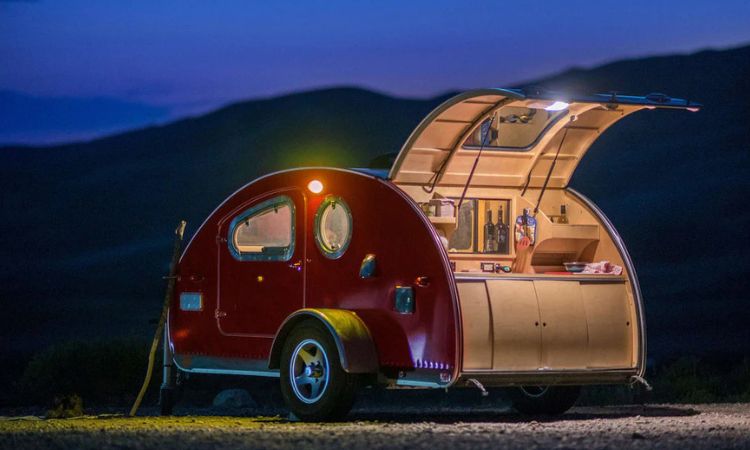
A teardrop trailer is a small, compact camper designed to be towed behind a vehicle. Its name is derived from the trailer’s distinctive teardrop shape, which provides better aerodynamics and fuel efficiency compared to larger, boxy trailers. While teardrop trailers come in a variety of sizes and designs, they typically offer a simple, minimalist camping experience that includes a sleeping area for two people and a galley (kitchen) in the rear.
Teardrop trailers are designed for easy towing, making them suitable for a wide range of vehicles, from small cars to larger trucks. Their lightweight and aerodynamic design means that even vehicles with modest towing capacities can often pull them without any issues. The size and weight of teardrop trailers make them a great option for those looking for a convenient, comfortable, and mobile way to experience the outdoors without the hassle of setting up tents and dealing with complex camping gear.
Types and Features of Teardrop Trailers
Teardrop trailers come in various types, each designed to cater to different camping needs. While the basic concept remains the same, the features, weight, and size of the trailers vary depending on their intended use. Let’s explore the most common types of teardrop trailers and their unique features:
Classic Teardrop Trailers
Classic teardrop trailers are the most basic and traditional form of this camping trailer. They typically feature a small sleeping space, often with a bed that fits two people, and a rear galley (a small kitchen area). These trailers are generally lightweight, with many models weighing under 1,500 lbs (680 kg). The simple design means there are fewer amenities, but these trailers are perfect for those who prioritize a no-frills camping experience and prefer to spend more time outdoors rather than inside the trailer. They can be easily towed by most cars or smaller SUVs.
Off-Road Teardrop Trailers
For those who prefer to venture off the beaten path, off-road teardrop trailers are the ideal choice. These trailers are built with rugged, durable materials and feature heavy-duty suspension systems, off-road tires, and reinforced frames to handle rough terrains and challenging weather conditions. Off-road teardrop trailers tend to weigh more than their classic counterparts due to the robust construction, but they are still relatively lightweight compared to larger RVs and trailers. With these trailers, you can explore remote camping spots that may be inaccessible to regular campers.
Luxury Teardrop Trailers
Luxury teardrop trailers offer a higher level of comfort and convenience for those who want more than just a simple place to sleep. These trailers include advanced features such as air conditioning, larger beds, full kitchens, upgraded electrical systems, and sometimes even small bathrooms. The extra amenities add weight, so luxury teardrop trailers tend to weigh more than the basic models. However, they are still much smaller and easier to tow compared to larger campers or RVs. If you’re looking for comfort with a minimalist footprint, a luxury teardrop trailer is a great option.
Custom-Built Teardrop Trailers
Some campers prefer to have a trailer tailored to their specific needs, and that’s where custom-built teardrop trailers come in. These trailers can be designed to meet any specific requirement, whether that’s more storage space, different interior layouts, or additional features like solar panels and custom furniture. The weight of a custom-built trailer will vary depending on the materials and features chosen. For example, if you choose lightweight materials like aluminum and minimalistic features, your trailer could weigh less. On the other hand, opting for heavier materials or additional amenities could result in a heavier trailer.
How Much Does A Teardrop Trailer Weigh?
The weight of a teardrop trailer can range from as little as 600 lbs (272 kg) for the smallest models, to over 3,000 lbs (1,360 kg) for more luxurious or feature-packed trailers. Understanding the weight is crucial when determining the best vehicle for towing and calculating fuel efficiency. Let’s break down the different weight ranges based on trailer type:
Lightweight Models
Some of the lightest teardrop trailers weigh just 600 lbs (272 kg) when empty. These trailers are typically the smallest models, with minimal features. They often come with just a bed and small cooking area, making them ideal for solo travelers or couples who prioritize simplicity. Despite their small size, these trailers can still provide comfort and shelter for outdoor adventures.
Standard Models
Most standard teardrop trailers weigh between 1,000 lbs (454 kg) and 1,500 lbs (680 kg). These models often feature a bed for two, a small kitchen, and additional storage space. They offer a bit more comfort and convenience without significantly increasing the weight, making them a good choice for those looking for a balance of simplicity and functionality.
Heavy-Duty or Luxury Models
Larger teardrop trailers that come with more advanced features, such as larger kitchens, full electrical systems, and more living space, tend to weigh significantly more. These trailers can weigh anywhere from 2,000 lbs (907 kg) to 3,200 lbs (1,451 kg) or more. While these trailers provide extra comfort and luxury, they require a more powerful vehicle for towing.
Teardrop Trailer Weight Comparison Table
To give you a better understanding of the weight distribution across different models, here’s a detailed comparison table showcasing various teardrop trailers:
| Model | Dry Weight (lbs) | Gross Weight (lbs) | Length (ft) | Width (ft) | Price (USD) | Features | Suspension Type |
|---|---|---|---|---|---|---|---|
| Timberleaf Pika | 1,025 (464 kg) | 1,500 (680 kg) | 10 | 5 | $19,000 | Classic design, off-road capable | Heavy-duty |
| Little Guy Max | 3,140 (1,426 kg) | 4,200 (1,905 kg) | 15 | 6 | $27,000 | Luxury, large kitchen, A/C, and more | Independent |
| Vistabule Teardrop | 1,330 (603 kg) | 2,200 (998 kg) | 12 | 6 | $23,995 | Large rear galley, off-road suspension | Independent |
| Bean Trailer Black Bean | 2,500 (1,134 kg) | 3,000 (1,361 kg) | 12 | 5.5 | $22,000 | Off-road, spacious sleeping area | Heavy-duty |
| nuCamp TAB 400 | 2,920 (1,326 kg) | 3,500 (1,588 kg) | 15 | 6.5 | $25,000 | Full kitchen, comfortable interior | Independent |
Basics of Teardrop Trailer Weight
To understand teardrop trailer weight more thoroughly, let’s define some important terms that you will often encounter when looking at trailer specifications:
Dry Weight
Dry weight refers to the weight of the trailer when it is completely empty, without any cargo, water, propane, or personal gear. This is often the weight listed by manufacturers and is helpful for understanding how much weight you’re adding to your vehicle when you tow the trailer. For example, a classic teardrop trailer may have a dry weight of around 1,000 lbs (454 kg), while a luxury model could be closer to 2,500 lbs (1,134 kg).
Gross Weight
Gross weight is the total weight of the trailer when it is fully loaded with all of your gear, water, propane, and other supplies. It is important to know the gross weight of your trailer because this determines how much weight your towing vehicle will need to handle.
Tongue Weight
Tongue weight refers to the amount of force the trailer exerts on the hitch of your tow vehicle. It is important to ensure that the tongue weight is within the recommended limits for your vehicle to maintain stability and prevent swaying during towing. Typically, tongue weight should be about 10-15% of the trailer’s total weight.
Factors Influencing Teardrop Trailer Weight
The weight of a teardrop trailer is one of the most important considerations when choosing the right model for your needs. Several factors affect the weight of a teardrop trailer, from the materials used in construction to the size and the type of features included. Each of these factors plays a significant role in determining how much a trailer will weigh, which in turn affects towing capacity, fuel efficiency, and overall maneuverability. In this section, we will dive into the key factors that influence the weight of teardrop trailers, so you can make an informed decision when selecting the right one for your next adventure.
1. Materials
The choice of materials is one of the most crucial factors that directly impact the overall weight of a teardrop trailer. Materials not only determine how durable and sturdy the trailer will be but also significantly affect its weight. Different materials have varying weight-to-strength ratios, which means that lighter materials can help reduce the overall weight of the trailer while still maintaining structural integrity.
- Aluminum and Fiberglass: Many modern teardrop trailers are constructed using lightweight materials like aluminum and fiberglass. These materials are known for their high strength-to-weight ratios, making them perfect for trailers that need to remain lightweight but durable. Aluminum, in particular, is resistant to rust and corrosion, making it ideal for trailers that will be exposed to the elements for long periods. Fiberglass is also lightweight and provides good insulation, but it’s slightly less durable than aluminum. Together, these materials help keep the overall weight of a teardrop trailer low while maintaining the necessary strength for towing and durability.
- Wood and Steel: On the other hand, trailers made from wood or steel tend to be much heavier. While wood is often used in the interior for paneling and cabinetry, steel is more commonly found in older or more industrial-style trailers. Steel is incredibly strong, but it also adds significant weight, which may make it harder to tow, especially with smaller vehicles. Some custom-built trailers use heavier wooden frames for aesthetics or additional strength, which can add substantial weight compared to more modern, lightweight designs.
- Composite Materials: Some teardrop trailers incorporate composite materials, such as carbon fiber, for enhanced durability while still keeping the weight low. These materials, while more expensive, provide superior strength and lightness, though they may not be as commonly used due to their cost.
2. Size and Dimensions
The size and dimensions of the teardrop trailer play a significant role in determining its overall weight. Larger trailers require more materials to construct, which inherently increases their weight. When you increase the length, width, or height of a trailer, more structural support is needed, as well as additional insulation, flooring, and roofing materials.
- Length and Width: A longer and wider trailer requires more materials to cover the added surface area, making it heavier. For instance, a compact teardrop trailer might measure around 8 to 10 feet in length and 4 to 5 feet in width, while larger models can stretch up to 15 feet in length and 6 feet in width. While a larger trailer may offer more space for amenities like a larger bed, extra storage, or a bigger kitchen, it also comes with an increased weight due to the additional materials required.
- Height: The height of the trailer affects its structural design and weight as well. Taller trailers require more roofing and additional structural supports, especially if they include a more spacious sleeping area or increased headroom for comfort. Taller trailers are typically heavier than their shorter counterparts because of the increased size and complexity of the construction.
- Living and Storage Space: Trailers with more storage or living space are often built larger to accommodate the extra room, which in turn adds weight. A trailer designed to offer more comfort and convenience for extended stays will typically include larger kitchens, more storage, and possibly even a bathroom area, all of which contribute to additional weight.
3. Suspension System
Teardrop trailers designed for off-road use tend to have more robust suspension systems to handle rugged terrain. Off-road trailers require more durable components such as heavy-duty axles, shock absorbers, and reinforced chassis to withstand the stresses of driving on uneven or rough surfaces.
- Off-Road Suspension: The inclusion of a specialized off-road suspension system adds extra weight to the trailer. These systems are built to be more durable and capable of handling obstacles such as rocks, uneven ground, and rough roads. Off-road teardrop trailers are typically heavier than their on-road counterparts due to the stronger suspension systems required for such use. These trailers also tend to have larger wheels and tires designed to grip and support the trailer on uneven surfaces, further increasing their weight.
- On-Road Suspension: Standard on-road trailers, in contrast, typically have lighter suspension systems as they are not built for the same level of rugged terrain. These trailers usually have basic coil spring suspension, which is sufficient for smooth, paved roads but doesn’t add significant weight to the overall trailer.
4. Included Features
The features and amenities included in a teardrop trailer can significantly affect its weight. Many modern teardrop trailers are equipped with advanced features for enhanced comfort and convenience, and each of these components adds weight. While these features contribute to a more comfortable camping experience, they are essential to consider if you are concerned about the overall towing capacity and fuel efficiency.
- Kitchen and Appliances: A standard teardrop trailer often includes a built-in galley kitchen, which may feature a stove, refrigerator, sink, and storage cabinets. These elements add weight, especially if you opt for larger appliances or more robust materials like stainless steel. Some luxury trailers even include microwaves, full-size fridges, and other kitchen amenities that further increase the trailer’s overall weight.
- Electrical Systems and Solar Panels: Many modern trailers include electrical systems powered by solar panels, batteries, or even small generators. These systems enable the trailer to power lights, appliances, and other equipment. However, the addition of solar panels, batteries, and wiring can add substantial weight to the trailer, particularly if the trailer is equipped with a large power system designed to support off-grid living for extended periods.
- Air Conditioning and Heating: For those who plan to camp in various climates, many teardrop trailers come equipped with air conditioning or heating systems. These systems, while providing comfort, are relatively heavy. Air conditioning units, in particular, can be quite weighty, as they require additional space, electrical components, and cooling mechanisms.
- Bathroom Facilities: Although not common in all teardrop trailers, some high-end models include small bathroom areas with a toilet and shower. The addition of plumbing systems, water tanks, and other bathroom amenities can add a considerable amount of weight to the trailer.
- Interior Furnishings: The quality of the interior furnishings also impacts the overall weight of the trailer. High-end finishes such as premium mattresses, cabinetry, and upholstery materials can make the trailer more comfortable but will increase its weight. Wood paneling, heavy mattresses, and custom furniture all contribute to the overall weight, especially in luxury models.
Why Teardrop Trailer Weight Matters
Understanding the weight of a teardrop trailer is crucial for several reasons. It impacts your towing vehicle, fuel efficiency, and safety on the road.
Towing Compatibility
The most important reason to consider weight is towing compatibility. It is essential to ensure that your vehicle is capable of towing the trailer without exceeding its towing capacity. Exceeding the towing capacity of your vehicle can lead to unsafe driving conditions, including loss of control and potential accidents.
Fuel Efficiency
Heavier trailers require more fuel to tow. The added weight can strain your towing vehicle’s engine and reduce its fuel efficiency, especially on longer trips. Lighter trailers tend to be more fuel-efficient, which is a key consideration for those who plan to use the trailer frequently.
Maneuverability
Lighter trailers are easier to tow and maneuver, especially when navigating tight spaces or winding roads. Heavy trailers, on the other hand, may be more difficult to control, particularly in adverse weather conditions or while making sharp turns.
Safety
Safety is a key concern when towing any trailer. Ensuring that your trailer’s weight is within the recommended range for your vehicle ensures that you can maintain control and avoid accidents on the road.
How Much Does A Teardrop Trailer Cost?
Teardrop trailers come in a wide range of prices, depending on their size, features, and brand. Below is an overview of typical price ranges:
- Entry-Level Models: Basic teardrop trailers without many amenities generally cost between $5,000 and $10,000. These trailers typically feature just a bed and a basic kitchen.
- Mid-Range Models: These trailers range from $10,000 to $20,000 and often include features like larger kitchens, improved suspension, and more comfortable sleeping arrangements.
- High-End Models: Luxury teardrop trailers with advanced amenities like air conditioning, high-end interiors, and large kitchens typically cost $20,000 and up.
How Much Does It Cost To Rent A Teardrop Trailer?
Renting a teardrop trailer is an excellent option for those who want to try one out before committing to a purchase. Rental prices vary based on the model, location, and rental duration:
- Daily Rates: $50 to $150 per day, depending on the season and trailer features.
- Weekly Rates: $300 to $900 per week, with prices fluctuating based on demand and location.
How Much Fuel Does A Teardrop Trailer Use?
When towing a teardrop trailer, your vehicle’s fuel consumption will increase. On average, you can expect an increase of 10-20% in fuel usage, depending on the weight of the trailer and the driving conditions. Driving in hilly terrain, at high speeds, or off-road will further increase fuel consumption.
How Fast Can A Teardrop Trailer Go?
Teardrop trailers are designed to be towed at highway speeds, typically around 65-70 mph (105-113 km/h). Going faster than this can cause instability, especially for lighter trailers. It’s important to maintain a steady speed to ensure safe towing.
Dimensions of a Teardrop Trailer
Teardrop trailers are compact in size, which makes them easy to tow and store. They typically have the following dimensions:
- Length: 8 to 15 feet (2.4 to 4.5 meters).
- Width: 4 to 6 feet (1.2 to 1.8 meters).
- Height: 4 to 5 feet (1.2 to 1.5 meters).
Conclusion
Teardrop trailers are a fantastic choice for those seeking a compact, lightweight way to enjoy camping. Understanding their weight is crucial for ensuring you select the right trailer for your towing vehicle, as well as maintaining safety and fuel efficiency on your journey. Whether you opt for a basic model or a luxury off-road version, knowing what to expect in terms of weight will help you make an informed decision and enjoy your camping experience to the fullest.
Fun Facts
- The first teardrop trailers were created in the 1930s and quickly became popular among DIY enthusiasts.
- Despite their small size, some modern teardrop trailers feature advanced amenities like solar panels, air conditioning, and Bluetooth speakers.
- Teardrop trailers are highly aerodynamic, which reduces wind resistance and improves fuel efficiency.
- Some of the lightest teardrop trailers can weigh as little as 600 lbs (272 kg), making them towable by motorcycles.
- Today’s teardrop trailers often include modern conveniences, making them an excellent option for comfort-focused campers.