
Honey, with its diverse flavors and rich nutritional profile, has become an essential ingredient in kitchens worldwide. Whether used in baking, cooking, or simply enjoyed on a slice of toast, honey is cherished not just for its taste but also for its health benefits. But when it comes to purchasing honey, one key factor often overlooked is its weight, especially when it’s packed in a quart jar.
Understanding the weight of a quart jar of honey is crucial for various reasons, such as precise cooking and baking measurements, correct labeling for commercial sales, and efficient shipping and packaging. This article will provide an in-depth analysis of the weight of a quart jar of honey, detailing various factors that affect it, comparisons between different types of honey, and insights into how this weight matters for both consumers and producers.
What Is A Quart Jar Of Honey?
A quart jar of honey is a container that holds one quart, which is equal to 32 fluid ounces or approximately 946 milliliters of honey. A quart, as a measurement unit, is used primarily in the United States, though many countries around the world may use metric units like liters for similar measurements. A quart of honey is often used by beekeepers, culinary experts, and commercial producers, as it offers a standard and convenient amount for a wide variety of uses.
When packed in a jar, the honey’s weight can vary. Factors like the type of honey, its moisture content, and even the size and design of the jar itself contribute to the final weight. Honey can come in many forms: raw, processed, filtered, or unfiltered, and each type has slightly different characteristics. While a quart jar of honey might appear to be a simple unit of measurement, the actual weight can fluctuate, making it essential to understand how these factors play a role.
In this section, we’ll break down what a quart jar of honey consists of, how it’s commonly measured, and the significance of this measurement in everyday use.
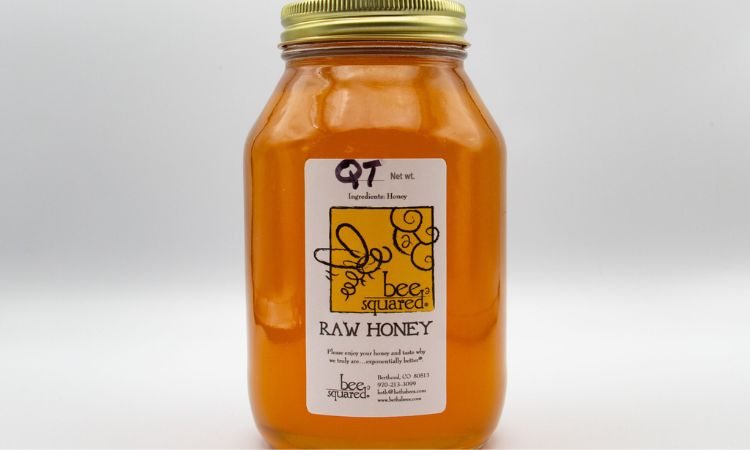
How Much Does A Quart Jar Of Honey Weigh?
The weight of a quart jar of honey is influenced by several factors. However, we can establish a general guideline for what you can expect.
- In Pounds: A typical quart jar of honey weighs approximately 3 pounds (48 ounces).
- In Kilograms: This translates to about 1.36 kilograms.
While this is a general estimate, the actual weight may differ based on several factors that we will explore in more detail in the following sections.
Typically, raw honey, especially when unprocessed and unfiltered, tends to have a higher moisture content, which can slightly affect its density and weight. The floral source of the honey (i.e., what flowers the bees have gathered nectar from) also plays a significant role in determining the density and thus the weight of the honey.
It’s important to note that honey is often thicker and denser than water, meaning it weighs more than an equivalent volume of water. As a result, a quart of honey will generally be heavier than a quart of water.
Comparison Table: Quart Jar of Honey Weight
To provide a better understanding of how honey’s weight varies depending on the type and its origin, let’s take a closer look at the weight of various types of honey in a quart jar.
| Honey Type | Weight (Pounds) | Weight (Kilograms) | Country of Origin | Price Range (USD) | Floral Source | Moisture Content |
|---|---|---|---|---|---|---|
| Raw Clover Honey | 3.0 | 1.36 | USA | $10 – $15 | Clover | 18% – 20% |
| Raw Manuka Honey | 3.2 | 1.45 | New Zealand | $30 – $50 | Manuka | 16% – 18% |
| Raw Acacia Honey | 3.0 | 1.36 | Europe | $15 – $20 | Acacia | 17% – 19% |
| Raw Wildflower Honey | 3.0 | 1.36 | USA | $12 – $18 | Wildflowers | 17% – 20% |
| Organic Orange Blossom Honey | 3.1 | 1.41 | USA | $18 – $25 | Orange Blossom | 18% – 19% |
Explanation of the Table:
- Weight (Pounds/Kilograms): The weight represents a quart jar of honey, accounting for the jar itself as well as the honey.
- Country of Origin: Honey can vary significantly based on where it is sourced. Different regions and climates affect the bees’ access to nectar and, in turn, the honey produced.
- Price Range (USD): The price depends on the rarity of the honey, its floral source, and the production methods used.
- Floral Source: The type of flowers the bees have foraged from can alter the taste, color, and weight of the honey. For instance, Manuka honey, derived from the Manuka plant in New Zealand, is typically denser and more expensive than other types.
- Moisture Content: Moisture content plays a huge role in the density and, subsequently, the weight of honey. Higher moisture content can make the honey less dense and therefore slightly lighter.
Basics of a Quart Jar of Honey Weight
The weight of honey in a quart jar is primarily dependent on its volume and density. Since honey is denser than water, a quart of honey will weigh more than the same volume of water. A quart, which measures about 32 fluid ounces (946 milliliters), is generally the standard packaging for commercial honey products, particularly for beekeepers or small-scale producers.
As mentioned earlier, a quart jar of honey weighs around 3 pounds or 1.36 kilograms. However, there are small variations depending on the moisture content, the processing method, and the floral source.
For example, raw honey tends to retain more moisture and is often less dense than its processed counterparts, which may have a higher viscosity and can sometimes be diluted. Similarly, certain types of honey, such as Manuka honey, are known to be thicker and denser than more common honey types like clover or wildflower, affecting the overall weight in a quart jar.
The type of jar also influences the total weight. While glass jars are commonly used for honey packaging, they tend to be heavier than plastic alternatives. So, while the honey itself may weigh the same, the material of the jar can make a significant difference in the overall weight.
Factors Influencing a Quart Jar of Honey Weight
Several factors can influence the weight of honey when it’s packed in a quart jar. Let’s explore these factors in more detail:
1. Moisture Content
Honey naturally contains water, and its moisture content can vary between 16% and 20%. The higher the moisture content, the lighter the honey will be, as excess water reduces the density. Honey with lower moisture content is denser and weighs more. Raw honey, especially unfiltered varieties, tends to have a slightly higher moisture content than processed honey, which can lead to slight weight variations between the different types.
2. Honey Type
The floral source of honey plays a significant role in determining its weight. Manuka honey, for example, is known for being particularly thick and dense, giving it a higher weight per quart. On the other hand, lighter honey types like acacia honey or clover honey might weigh a bit less due to their different consistency and sugar composition.
3. Processing Method
Raw honey, which is minimally processed, retains more of its natural elements like pollen and enzymes. This makes it denser compared to processed honey, which may undergo filtering and pasteurization that can slightly dilute the product, resulting in a lighter honey. This factor is particularly noticeable when comparing raw and processed honey of the same type.
4. Storage Conditions
Honey’s density can change depending on storage conditions. Cooler temperatures can cause honey to thicken, increasing its density and slightly its weight. Conversely, honey stored in warmer conditions may become runnier, reducing its density and weight.
Why A Quart Jar of Honey Weight Matters
The weight of a quart jar of honey isn’t just a trivial detail—it’s important for a variety of reasons:
1. Recipe Precision
For cooking and baking, having an accurate weight measurement is crucial. While volume measurements are commonly used in recipes, weight ensures precision. This is particularly important in recipes that require a balance of ingredients, especially when substituting sugar for honey. For example, a quart of honey weighs approximately 3 pounds, and knowing this allows for accurate substitution in recipes.
2. Product Labeling
For honey producers, labeling is an essential aspect of product presentation. Accurate weight measurements are required by law for consumer protection and transparency. Misleading or inaccurate labeling could harm a brand’s reputation and lead to legal issues.
3. Packaging & Shipping
The weight of honey also impacts packaging decisions. Heavier honey might require sturdier jars and packaging to avoid breakage. In addition, shipping costs are often based on weight, so knowing the exact weight of a quart jar can help businesses estimate and manage shipping expenses more effectively.
4. Consumer Trust
Consumers often equate the weight of honey with its quality. For instance, people may assume that a heavier jar of honey indicates that it’s richer in flavor or more substantial, which could influence purchasing decisions. Accurate weight measurements help build trust between honey producers and their customers.
How Much Does a Quart Jar of Honey Cost?
The price of a quart jar of honey varies widely depending on several factors. These include the floral source, the production method, the country of origin, and the purity of the honey. For instance, common types of honey such as clover or wildflower honey typically range in price from $10 to $15 per quart. Specialty honeys like Manuka honey, which is considered one of the most prized types of honey, can be considerably more expensive, with a quart often costing between $30 to $50.
Other premium varieties, such as organic honey or single-origin honeys, may also come at a higher price point due to the extra care taken in sourcing and production. Prices can fluctuate depending on factors like demand, seasonality, and market trends.
What Is the Size of a Quart Jar of Honey?
The size of a quart jar is standardized, holding 32 fluid ounces (946 milliliters) of liquid. However, the physical dimensions of the jar itself can vary slightly based on the design and manufacturer. A typical quart mason jar measures approximately 6.5 inches (16.5 cm) in height and 3.5 inches (9 cm) in diameter. These measurements make it a convenient size for storage, sale, and transport.
How Big Is a Quart Jar of Honey?
A standard quart jar of honey measures roughly 6.5 inches (16.5 cm) in height and 3.5 inches (9 cm) in diameter. These dimensions are typical for mason-style jars, but variations exist depending on the specific design and the manufacturer. Some jars may have a wider base or a taller body, which can affect the overall size, but the volume remains constant at 32 fluid ounces or 946 milliliters. The quart jar size strikes a balance between being large enough for a moderate amount of honey while still being convenient for storage and handling.
For consumers, understanding the size of a quart jar can help in determining how much space is needed for storage. It also influences how the jar will fit into cabinets, refrigerators, or on supermarket shelves. Additionally, for beekeepers or honey producers, the size of the jar may play a role in packaging decisions, especially when selling honey in bulk or managing larger operations.
Uses of a Quart Jar of Honey
A quart jar of honey holds enough honey for multiple uses, whether in a home kitchen, a commercial kitchen, or for beekeepers storing their harvest. Below are some of the most common and practical uses for a quart of honey:
1. Culinary Applications
Honey is a natural sweetener, making it a popular alternative to sugar in many recipes. A quart of honey is ideal for home bakers, chefs, or anyone who enjoys experimenting in the kitchen. It can be used in beverages such as tea, coffee, or smoothies, or incorporated into dishes like salad dressings, marinades, sauces, and glazes for meats or vegetables.
Honey also serves as a key ingredient in various baked goods like cakes, muffins, and cookies. When used as a sweetener, honey adds not only sweetness but also flavor, depth, and a moist texture to baked items.
2. Skincare and Beauty
Honey is renowned for its moisturizing and antibacterial properties, making it a staple in skincare. Many people use it in homemade face masks, body scrubs, and hair treatments. Due to its natural antimicrobial properties, honey can also be used to treat wounds or burns, as it aids in the healing process. A quart of honey can go a long way when creating DIY beauty products, as it is often used as the base for numerous recipes.
3. Medicinal Uses
Honey has been used for centuries in traditional medicine. It has natural antioxidants, anti-inflammatory properties, and antimicrobial effects, which make it beneficial for soothing sore throats, coughing, and digestive issues. Honey is also a remedy for minor burns, cuts, and skin irritation, helping to reduce inflammation and promote healing.
Because of its high sugar content, honey provides a quick energy boost, which is why it’s often recommended for athletes or anyone needing an energy lift during strenuous activities.
4. Gifting
Honey is often packaged in beautiful, decorative jars and is given as a gift on various occasions. A quart jar of honey can be a thoughtful and meaningful present, especially when sourced from a specific floral variety like Manuka or wildflower. Honey jars can also be personalized with unique labels, making them perfect for holidays, weddings, or as corporate gifts. The versatility and natural appeal of honey make it a cherished gift item.
Quart Jar of Honey Weight and Calorie Chart
When it comes to nutrition, honey is high in calories due to its sugar content. Here’s an approximation of the calorie content for a quart of various types of honey:
| Honey Type | Weight (Pounds) | Weight (Kilograms) | Calories per Quart |
|---|---|---|---|
| Raw Clover Honey | 3.0 | 1.36 | 4,320 |
| Raw Manuka Honey | 3.2 | 1.45 | 4,480 |
| Raw Acacia Honey | 3.0 | 1.36 | 4,320 |
| Raw Wildflower Honey | 3.0 | 1.36 | 4,320 |
| Organic Orange Blossom Honey | 3.1 | 1.41 | 4,380 |
Explanation of the Chart:
- Weight (Pounds/Kilograms): This refers to the total weight of the honey in the quart jar, including the honey itself and the jar.
- Calories per Quart: Honey is high in sugar and thus provides a considerable amount of calories. The number of calories in a quart of honey can vary slightly depending on its type, moisture content, and floral source.
While honey is calorie-dense, it offers a range of nutrients such as vitamins, minerals, and antioxidants, making it a natural choice for health-conscious individuals. However, due to its high sugar content, it’s best consumed in moderation.
How Much Weight Do Quart Jars of Honey Lose When Used?
Honey is a highly viscous liquid, but over time, it can lose a small amount of weight due to evaporation. This is especially true if the jar is left open for extended periods, exposed to high temperatures, or stored in humid environments. The amount of weight lost is generally minimal, but it can add up if the jar isn’t sealed properly or if it’s stored in less-than-ideal conditions.
In general, the loss of weight from evaporation is not a significant issue unless the honey has been exposed to excessive heat or air. However, for producers, ensuring the proper sealing of honey jars is essential to prevent any loss in product weight or quality.
How Many Quart Jars of Honey Are in a Serving?
A typical serving size for honey is about one tablespoon (15 grams), which is approximately 0.75 ounces. Given that a quart of honey contains around 32 fluid ounces (or 946 milliliters), you can expect there to be about 64 servings in a quart jar of honey.
This makes it easy to calculate how long a quart jar of honey will last based on your usage. Whether used for daily sweetening in tea or coffee, as part of a recipe, or as a spread on toast, a quart of honey can last a considerable amount of time for an individual or a small family.
Conclusion
Understanding the weight of a quart jar of honey is not just about knowing how much it weighs; it’s about understanding how that weight can affect various aspects of its use, from cooking and baking to packaging and labeling. The weight of honey is influenced by factors like its moisture content, type, and processing method, all of which play a role in its final density. Knowing this information allows consumers, beekeepers, and businesses to make informed decisions when purchasing, using, or selling honey.
Whether you’re looking for a quart of honey to sweeten your morning tea, enhance your beauty regimen, or share as a gift, this understanding of honey’s weight will help you navigate your choices better. It’s not just about the sweetness—it’s about knowing exactly what you’re getting in every jar.
Fun Facts
- Honey never spoils, and jars of honey discovered in ancient Egyptian tombs have been found to be perfectly edible!
- It takes approximately 2 million flowers for a single bee colony to produce just one pound of honey.
- Some types of honey, like Manuka honey, are prized for their medicinal properties and can be significantly more expensive than other varieties.
- A single bee produces only about 1/12th of a teaspoon of honey in its entire lifetime.
- The color of honey can vary from light amber to dark brown, depending on the flower source and how it’s processed.